
Data centers are built for resilience. Redundant power feeds, mirrored storage, and layered IT safeguards are all designed to keep uptime as close to absolute as possible. Yet outages still happen — and more often than not, the weak point isn’t in the servers, but in the data center cooling systems that keep them stable.
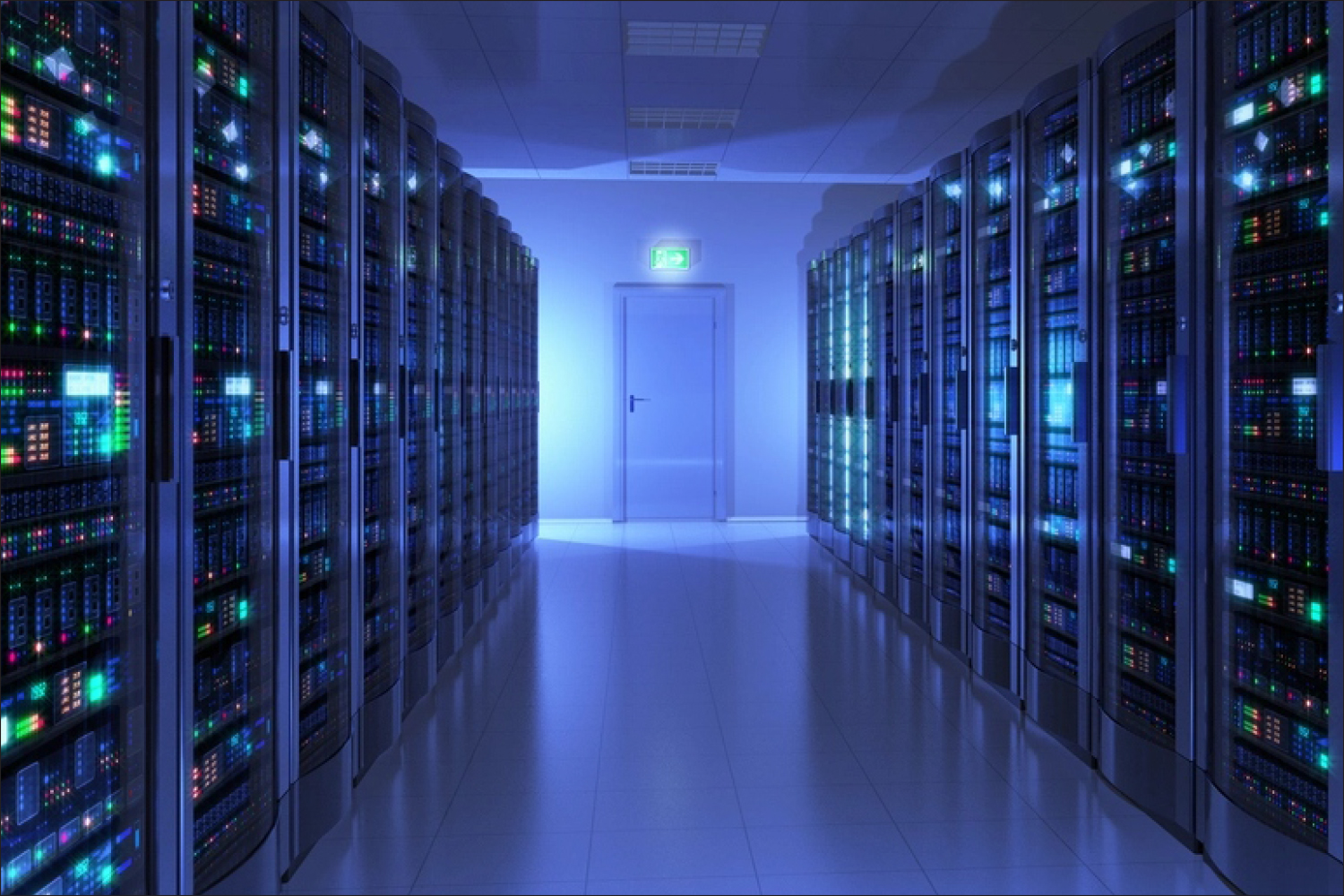
In July 2022, London’s record heatwave made that vulnerability impossible to ignore. At one Google data center, multiple redundant cooling systems failed at once, disrupting services for customers across the region. As Google later explained in its incident report: “A simultaneous failure of multiple, redundant cooling systems in one of the data centers that hosts the zone europe-west2-a impacted multiple Google Cloud services. This resulted in some customers experiencing service unavailability for impacted products.”
If even hyperscale operators with deep redundancy strategies can be disrupted by cooling system failures, no facility is immune. Global analysis by Uptime Institute supports this: cooling-related problems were the second leading cause of unplanned data center outages in 2023, responsible for nearly one in five incidents worldwide.
To understand how to prevent downtime in data centers, it’s important to look at how cooling systems fail in practice — and why the earliest warning signs are often missed.
How Cooling Systems Fail
Every cooling chain depends on rotating assets: pump-motor sets driving chilled and condenser water, chiller compressors with critical bearings, and CRAC/CRAH fans moving high volumes of air. Failures rarely begin with dramatic events. They typically start as small mechanical changes that degrade efficiency long before alarms sound.
- Imbalance — A fan wheel or pump impeller picks up fouling or loses material, creating a heavy spot. The 1× rotational component grows, axial/radial vibration increases, and bearing loads climb. Energy use increases while cooling output drops.
- Misalignment — Soft foot, pipe strain, or poor coupling installation leads to parallel or angular misalignment. Heat and vibration rise at the coupling; bearings run hotter; seals and couplings wear out early.
- Bearing wear — Minor lubrication issues or contamination kick off pitting and spalling. You’ll see changes in overall vibration first, then discrete bearing defect frequencies (BPFO/BPFI/BSF/FTF) as damage progresses.
- Mechanical looseness — Base bolts relax, shims creep, or housings fret. The spectrum shows harmonics and a “noisy” floor; the machine starts chasing itself on the base, accelerating fatigue.
- Cavitation (pumps) — Net positive suction head margins collapse under certain operating points. The signal gets “gravelly,” with broadband high-frequency content and characteristic sidebands; impeller and casing surfaces erode.
The common thread: these conditions develop quietly. Performance looks acceptable until the system crosses a tipping point — then, heat rises fast and uptime is at stake.
Limits of Visual Inspections
Routine walk-arounds and building management system (BMS) alarms remain essential, but they can’t always catch what matters most.
- Inspections are snapshots. Early-stage faults rarely produce visible or audible signs. By the time they do, failure is often imminent.
- BMS alarms focus on conditions, not causes. A humidity spike or temperature excursion tells you the environment is compromised, but not which pump or fan is about to fail.
Many teams discover faults only after performance drops — long after the root cause first appeared in vibration data.
Why Vibration Data Tells the Real Story
Vibration monitoring gives operators a direct view into mechanical health — the layer below environmental outcomes.Tracking overall vibration and frequency content over time reveals how faults begin and how quickly they progress. Subtle rises in 1× rotational components point to imbalance developing on a fan or impeller; sideband structures around running speed hint at looseness; discrete bearing defect tones confirm that a bearing has moved from “watch” to “plan work now.”
Because the data is quantitative and trendable, teams can separate harmless anomalies from genuine risk, cut down on alarm fatigue, and schedule the right action — balance, align, lubricate, or replace — before cooling capacity is compromised. Logged to a CMMS or DCIM, the same data becomes an auditable record of asset condition and maintenance decisions.
However, monitoring alone doesn’t close the gap. To be effective, it needs to be part of a governed program with clear processes and documentation.
5 Building Blocks of a Defensible Cooling Strategy
Data center cooling reliability can’t be left to chance. Leading operators treat it as a structured program built on five key elements:
- Baselines – Capture vibration profiles during commissioning to define what “normal” looks like.
- Trending and thresholds – Monitor changes over time, with alert levels tailored to pumps, fans, and chillers.
- Integration – Tie vibration alerts directly into work orders and DCIM dashboards for traceability.
- Escalation rules – Define when to rebalance, align, or replace equipment, so teams aren’t forced into debates during service level agreement (SLA) crises.
- Evidence – Maintain time-stamped logs to satisfy auditors, clients, and internal reviews.
These program elements only work if they translate to the floor. For pumps, operators can confirm operating points that avoid chronic low-NPSH conditions and trend vibration during seasonal setpoint changes. For fans, routine blade cleaning or belt service should always be followed by a balance check and alignment verification.
When these building blocks are in place, vibration monitoring shifts from “extra data” to a decision system that protects cooling performance and documentation standards.
Who Benefits From a Defensible Cooling Strategy
Different stakeholders gain different forms of assurance:
- Data center operators get verifiable uptime protection, stronger SLA defensibility, and audit-ready records — the kind of safeguards that help avoid incidents like the Google outage where cooling redundancy wasn’t enough.
- Contractors and builders hand over sites with documented baselines, proving commissioning quality and reducing post-handover disputes.
- Service providers and facility managers can deliver against tight SLAs more confidently, using vibration data to back up performance reports and justify recommendations.
By linking cooling reliability to multiple roles, operators can standardize expectations across projects, vendors, and sites — a key requirement for scaling global operations.
From Risk to Resilience
Cooling failures aren’t uncommon, and they aren’t confined to smaller facilities. Even the largest operators with redundant systems have seen data center outages triggered by mechanical faults in cooling infrastructure. The lesson is clear: redundancy alone doesn’t guarantee resilience.
By embedding vibration monitoring for data centers into a structured, predictive maintenance program, operators can catch problems earlier, plan interventions with confidence, and present an auditable record of equipment health.
For data centers where every second of uptime matters, that visibility is the difference between scrambling to recover and staying in control.
3 Questions Every Data Center Leader Should Ask Themselves
- Do we capture vibration baselines at commissioning?
- Are vibration alerts integrated with our work order system?
- Can we produce audit-ready logs of cooling system health?
If the answer to any of these isn’t a confident “yes,” it may signal a gap in your cooling reliability strategy.
Talk to a Fluke expert about building a program that fits your operations.
Author Bio: Brandon Devier serves as a Senior Engineer and Online Systems SME at Fluke, bringing over 10 years of experience in reliability engineering, analytics, and continuous improvement. His work focuses on helping customers apply connected systems and data-driven strategies to strengthen reliability and performance.